coach
Failed to load visualization
Sponsored
Trend brief
- Region
- 🇦🇺 AU
- Verified sources
- 3
- References
- 0
coach is trending in 🇦🇺 AU with 2000 buzz signals.
Recent source timeline
- · SMH.com.au · Graham Arnold breaks Iraq’s 40-year World Cup drought with historic victory
- · The Guardian · Iraq hold off Bolivia to claim final World Cup place
- · ESPN · Against all odds, Arnold and Iraq clinch the final 2026 World Cup spot
Graham Arnold’s Historic Victory: How Iraq Clinched the 2026 World Cup Spot
In a stunning twist of footballing destiny, Australia’s national coach Graham Arnold has led Iraq to their first-ever FIFA World Cup appearance in 40 years. The victory not only marks a monumental achievement for Iraqi football but also cements Arnold’s legacy as one of the most successful foreign coaches in Asian football history. With the 2026 FIFA World Cup now firmly on the horizon, fans across Australia and beyond are celebrating this unexpected triumph.
A Once-in-a-Lifetime Achievement
On April 1, 2026, Iraq secured qualification for the upcoming World Cup by defeating Bolivia 3–2 in a tense match held in Doha. This result meant that no other team could finish above them in the third round of AFC qualifiers, giving Arnold’s squad the final spot alongside Australia, Japan, South Korea, and Uzbekistan.
For Iraq—a nation still recovering from decades of conflict and instability—the victory transcends sport. It represents hope, resilience, and a renewed sense of national pride. As The Guardian reported, it ends a 40-year drought since their last appearance at the global tournament.
“This is more than just a win,” said Arnold during a post-match press conference. “It’s about belief. It’s about showing young people in Iraq that anything is possible if you fight for your dreams.”
The Road to Qualification: Drama, Doubt, and Determination
The journey to this historic moment was far from smooth. Despite being seeded in the third round due to their strong performance in earlier qualifying groups, Iraq entered the final stretch with little margin for error. They needed at least two points from their last three matches to guarantee their place—and they delivered in dramatic fashion.
Their campaign began with a hard-fought draw against Jordan before suffering a shocking 3–1 loss to Saudi Arabia. Then came a narrow 1–0 defeat to Australia in Sydney—a match that seemed to dash any realistic hopes of qualification.
But Arnold, known for his tactical discipline and ability to galvanise underdogs, refused to give up. In the penultimate game, Iraq staged a comeback against Lebanon, winning 2–1 thanks to late goals from forward Ali Faez and midfielder Alaa Abdul-Zahra.
Then came the showdown with Bolivia. Trailing 2–1 at halftime, Iraq turned the game around with two second-half strikes from striker Hawar Mulla Mohammed. The final whistle sparked wild celebrations among players, staff, and supporters who had traveled thousands of miles to witness the historic moment.
“We knew we had to win,” said captain Hawar Mulla after the match. “Every player gave everything. This victory belongs to every Iraqi who believed in us.”
Why This Victory Matters More Than Ever
While many associate World Cup qualification with sporting glory, Arnold’s success carries deeper significance. For a country still rebuilding its infrastructure and youth programs, reaching the world’s biggest football stage is a powerful symbol of progress.
Moreover, Arnold himself has become an unlikely hero in Australian football circles. Originally appointed to stabilise Australia’s campaign after a period of inconsistency, he was widely expected to focus solely on preparing the Socceroos for the 2026 tournament. Instead, his dual role—coaching both nations—has drawn mixed reactions.
Some critics questioned whether splitting his attention between two teams would dilute results. But Arnold defended his approach: “I’ve always said I want to leave a legacy beyond just Australia. If I can help develop football in Iraq too, then it’s worth it.”
His methods have clearly resonated. Under his guidance, Iraq has transformed from a team reliant on individual brilliance into a cohesive unit built on solid defence and clinical finishing. Their style mirrors Arnold’s signature 4-2-3-1 formation—structured, disciplined, and effective against stronger opponents.
Looking Ahead: Challenges and Opportunities
With qualification secured, all eyes now turn to June 2026, when Iraq will make their World Cup debut in North America alongside hosts USA, Canada, and Mexico. Reaching such a prestigious event is one thing; performing well is another.
Historically, teams from Asia have struggled to advance past the group stages in recent tournaments. Only Japan and South Korea have managed consistent performances at the World Cup in the past two decades. For Iraq, the challenge will be maintaining focus amid rising expectations.
Arnold remains cautiously optimistic. “Qualifying was the hardest part,” he told ESPN Australia. “Now we must prepare properly. We know we’ll face giants like Brazil or Germany—but we won’t be intimidated.”
Off the pitch, the implications extend further. Sponsors and broadcasters are already eyeing potential viewership spikes in the Middle East and diaspora communities worldwide. Merchandise sales have reportedly surged in Baghdad and Basra, while social media engagement has doubled since the qualification announcement.
Youth academies across Iraq are also reporting increased interest. Parents are encouraging their children to take up football, seeing firsthand how a single victory can inspire generations.
<center>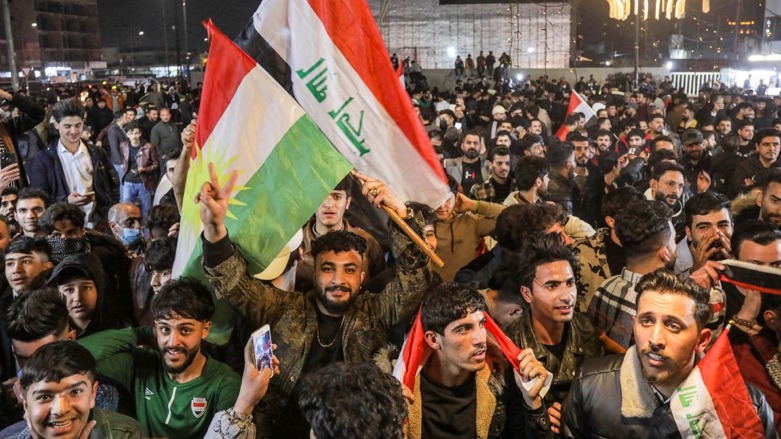 </center>
Supporters flood the streets of Baghdad following Iraq’s historic qualification for the 2026 FIFA World Cup.
Arnold’s Legacy: Beyond Borders
What makes this achievement even more remarkable is Arnold’s unconventional path. Born in England, raised in Australia, and now coaching in Iraq, he embodies the global nature of modern football. His willingness to embrace new challenges—even those outside traditional comfort zones—sets him apart from many contemporaries.
In Australia, where coaching tenures often end after modest results, Arnold’s longevity speaks volumes. He took over in 2018 and has since guided the Socceroos to the 2022 FIFA World Cup in Qatar—their seventh consecutive appearance—and the 2023 AFC Asian Cup final.
But his work in Iraq has earned him respect far beyond Oceania. Local journalists describe him as “patient, humble, and fiercely committed.” Unlike some high-profile imports who demand top salaries and star power, Arnold lives modestly in Baghdad, often training alongside local players rather than hiding behind luxury facilities.
“He treats every player equally,” said assistant coach Kadhim Mutashar. “Even when we lost to Australia, he stayed late to analyse footage and find ways to improve. That kind of dedication doesn’t go unnoticed.”
The Bigger Picture: Football as Diplomacy
Beyond the scorelines and tactics lies a larger story—one of sport acting as a bridge between cultures. In recent years, international football has increasingly been used as a tool for reconciliation and soft diplomacy, particularly in regions affected by war or division.
Iraq’s journey to the World Cup comes at a time when diplomatic relations with Western nations remain complex. Yet, football offers a neutral ground where politics fade into the background. Fans from different backgrounds cheer together, united by passion for the beautiful game.
Organisers are already planning cultural exchange programs ahead of the tournament, including youth clinics in Detroit, Toronto, and Los Angeles. These initiatives aim to foster mutual understanding and showcase Iraq’s rich heritage—not just through football, but via art, music, and storytelling.
“Sport has the power to heal,” said Nasser Al-Dhari, head of the Iraqi Football Association. “When our team walks onto the pitch in 2026, it won’t just represent athletes—it will represent resilience, unity, and the enduring spirit of a nation.”
What Comes Next?
As celebrations continue across Iraq, questions remain about long-term sustainability. Can the momentum be maintained without sustained investment? Will political instability disrupt grassroots development? And how will Iraq balance immediate success with long-term growth?
For now, however, the focus is on celebration. Schools are closed in several cities to allow students to watch the final match live. Restaurants and cafes report record crowds, while hashtags like #WorldCupForIraq trend globally on social media.
Meanwhile, Arnold prepares for a busy off-season. Plans include scouting trips to Europe, recruitment drives targeting diaspora talents, and collaboration with Australian federations to share coaching resources.
One thing is certain: the impact of this victory will echo far beyond the stadium walls. For millions of Iraqis watching from home—and for countless others inspired by Arnold’s journey—football has once again proven its power to transform lives.
*Sources:
ESPN Australia – Against all odds, Arnold and Iraq clinch the final 2026 World Cup spot
SMH – Graham Arnold breaks Iraq’s 40-year World Cup drought with historic victory
[The Guardian – Iraq hold off Bolivia to claim final World Cup place](https://www.theguardian.com/football/202