fixed mortgage rates increase
Failed to load visualization
Sponsored
Trend brief
- Region
- 🇨🇦 CA
- Verified sources
- 3
- References
- 5
fixed mortgage rates increase is trending in 🇨🇦 CA with 1000 buzz signals.
Recent source timeline
- · Toronto Star · Fixed mortgage rates up dramatically since start of Iran war — and they’re unlikely to drop soon
- · Bloomberg.com · US Mortgage Rates Hit Highest This Year, Slowing Refinancing
- · Realtor.com · Fears of Global Energy Crisis Loom Over Spring Housing Market
<center>Fixed Mortgage Rates Climb Amid Geopolitical Tensions: What Canadian Homeowners Need to Know
 </center>
The Rising Tide: How Global Conflict Is Reshaping Canada's Housing Market
For Canadian homeowners and prospective buyers, the past year has been a rollercoaster of shifting mortgage landscapes. While variable-rate borrowers celebrated the Bank of Canada's (BoC) first interest rate cuts in over two years—lowering the overnight rate from 5.0% to 4.5% in June 2024—many fixed-rate mortgage holders have remained on tenterhooks, watching fixed rates climb steadily despite central bank easing.
As of March 2026, average 30-year fixed mortgage rates in the United States have surged to 6.11%, up from 6.0% just one week prior, according to Freddie Mac. In Canada, similar upward pressure is evident. Bloomberg reports that U.S. mortgage rates have hit their highest point this year, slowing refinancing activity across North America. This trend isn't isolated to America—Canadian fixed rates have seen dramatic increases since the escalation of the Iran-Israel conflict in April 2024.
<center> </center>
Recent Developments: A Timeline of Rate Volatility
The recent spike in fixed mortgage rates began in earnest after the outbreak of large-scale hostilities between Israel and Iran in mid-April 2024. Since then, fixed mortgage rates in Canada have climbed by double-digit basis points, driven primarily by rising global bond yields as investors seek safe-haven assets during geopolitical uncertainty.
Key milestones include:
- April 2024: Fixed mortgage rates begin rising sharply following the start of the Iran war, with Canadian lenders increasing five-year fixed rates by 50–75 basis points within weeks.
- May 2024: Bond markets react to oil price volatility; 10-year government bond yields climb above 4.2%, directly influencing mortgage pricing.
- September 2024: Despite BoC cutting its key rate to 4.5%, fixed mortgage rates continue to rise—a divergence that puzzles many analysts.
- February 2026: Average 30-year U.S. fixed rate hits 6.11%, while Canada sees similar upward movement, especially among major banks like RBC, TD, and CIBC.
- March 2026: Multiple news outlets report that fixed rates are "unlikely to drop soon," citing persistent inflation concerns and ongoing Middle East instability.
 </center>
Why Are Fixed Rates Moving Against Variable Rates?
This divergence between variable and fixed mortgage rates—where variables fall but fixed stay high—is particularly puzzling for Canadians who expected synchronized moves following BoC policy shifts. However, experts explain that fixed-rate mortgages are not directly tied to the overnight lending rate but instead reflect long-term bond yields.
“Fixed mortgage rates are anchored to government bond markets,” says Dr. Elena Marquez, senior economist at the Fraser Institute. “When investors worry about global supply chains or energy security due to conflict, they flock to bonds, driving down their prices and pushing yields higher. That’s exactly what we’re seeing now.”
In times of war or geopolitical tension, investors often treat long-term government bonds as safe havens. But when uncertainty fuels inflation fears—especially around oil prices—bond yields rise, and so do fixed mortgage rates. This mechanism explains why fixed rates continued climbing even as the BoC eased monetary policy.
<center> </center>
Immediate Effects: Who’s Affected Most?
Homeowners Coming Off Fixed Terms
Approximately 1.8 million Canadian homeowners are set to come off their current fixed-rate mortgages in the next 12 months. Many entered contracts at historically low rates below 2.5%. With new five-year fixed terms now averaging around 6.0–6.5%, renewal could mean monthly payments increasing by $500–$900 per month for typical Toronto or Vancouver households.
“I locked in at 2.34% in 2021—now I’m looking at renewing at nearly triple that,” says Mark Thompson, a software engineer in Calgary. “It’s forcing me to rethink whether I can keep my home.”
First-Time Buyers Face Greater Challenges
First-time homebuyers are bearing the brunt of the surge. With average home prices still elevated in major cities, higher mortgage costs reduce purchasing power significantly. According to Realtor.com, housing demand has softened in Q1 2026, with fewer transactions compared to early 2024.
<center> </center>
Refinancing Activity Slows Sharply
Another notable impact is the sharp decline in refinancing. As reported by Bloomberg, U.S. refinancing applications dropped by 18% in February 2026 alone. In Canada, lenders report similar trends—borrowers are hesitant to refinance into higher-rate loans unless absolutely necessary.
Broader Economic Implications
The rising cost of borrowing affects more than just individuals. Construction slows when financing becomes expensive, and commercial real estate faces headwinds. Moreover, consumer spending power shrinks as more income goes toward housing, potentially dampening economic growth.
“High fixed mortgage rates act like a tax on household wealth,” notes financial analyst Priya Nair of TD Economics. “They discourage mobility, reduce equity extraction, and make it harder for families to invest in education or retirement.”
<center>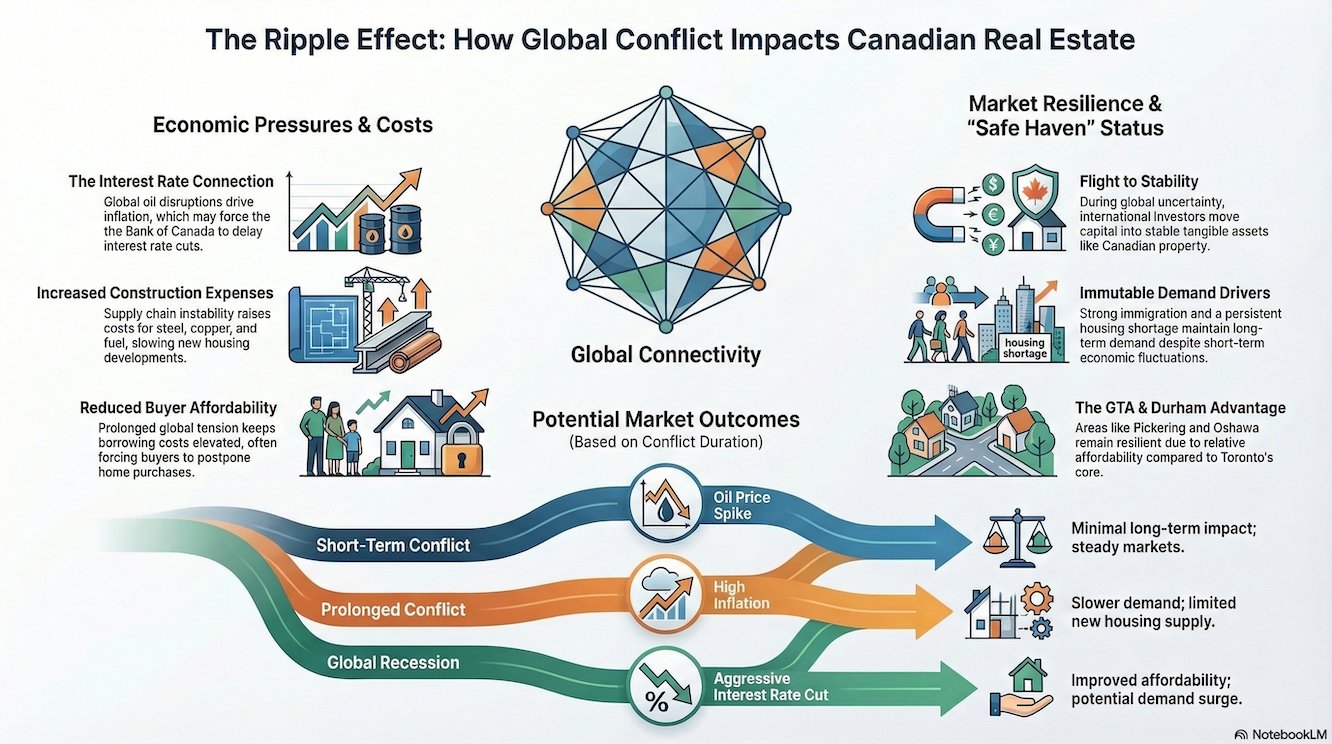 </center>
Historical Context: Have We Seen This Before?
While current conditions feel unprecedented, history offers some parallels. During the Gulf War (1990–1991), oil prices spiked, bond yields rose, and mortgage rates climbed—though not as dramatically as today. More recently, the 2008 financial crisis saw massive volatility in both bond and housing markets, though driven by different factors.
What sets the current situation apart is the speed and magnitude of change. Since April 2024, Canadian fixed rates have increased by roughly 150 basis points in less than 12 months—the fastest such move since the early 1990s.
Expert Perspectives: What Lenders and Analysts Say
Major Canadian lenders acknowledge the influence of global events on domestic pricing.
“We monitor international developments closely,” said a spokesperson for Royal Bank of Canada (RBC). “Geopolitical risks, especially those impacting energy supplies, feed through to bond markets, which directly affect our fixed-rate offerings.”
Meanwhile, mortgage broker Sarah Chen advises clients to act quickly if considering a renewal.
“If you’re coming off a fixed term, lock in now if possible,” she urges. “Even small differences in rate can translate into tens of thousands of dollars over the life of a loan.”
<center> </center>
Looking Ahead: Will Rates Fall? When Might They?
Predicting mortgage rate movements remains notoriously difficult—but several indicators suggest caution.
- Bond Yields: If global tensions ease or oil prices stabilize, long-term bond yields may retreat, pulling fixed rates down.
- Inflation Trends: Persistent core inflation above 2.5% could keep BoC cautious about further rate cuts, limiting relief for fixed-rate borrowers.
- Election Uncertainty: The upcoming federal election adds another layer of unpredictability. Political promises on housing affordability could influence market sentiment.
However, most analysts agree that any significant drop in fixed rates is unlikely before late 2026 or early 2027.
“We’re probably looking at a wait-and-see approach for the next six months,” says Michael Tran, chief financial strategist at RBC Capital Markets. “Unless there’s a major de-escalation in the Middle East or a sharp drop in commodity prices, fixed rates will remain elevated.”
<center></center>Related News
More References
Fixed mortgage rates up dramatically since start of Iran war — and they're unlikely to drop soon
Canadians are seeing double-digit basis point hikes as the bond yield responds to rising oil prices. And they're unlikely to drop anytime soon.
Mortgage Rates Increase As Conflict Continues Overseas
Although mortgage rates have been falling, they clearly haven't dropped enough to push more property owners to sell. Many homeowners are sitting on low mortgage rates due to refin
'I'm a mortgage expert - my message to the 1.8m homeowners coming off fixed rates'
Homeowners are being urged to act amid an increase in mortgage rates due to the conflict in the Middle East. A mortgage expert has warned that borrowers "cannot afford to sit back and hope rates will fall again" following news that major lenders are raising their rates.
Interest rates are dropping, so why aren't fixed mortgage rates dropping too?
Many Canadian borrowers were relieved to see the Bank of Canada (BoC) begin to cut interest rates in mid-2024, especially those with variable-rate mortgages. However, fixed-rate mortgage rates haven't dropped at the same pace, leaving some prospective ...
How to choose a mortgage rate in war time
Fixed mortgage rates are also not immune to the pressures of war. In times of uncertainty, investors usually pile into bonds, which are viewed as safe haven investments as yields are backed by stable governments. These bond yields are used by lenders to set the price of fixed mortgage rates.